A bar near my house recently started selling "pints" in 16 oz. glasses. What should you be getting in Ontario when you order a "pint"?
According to the Weights and Measures Act:
Published on July 8th, 2015
A bar near my house recently started selling "pints" in 16 oz. glasses. What should you be getting in Ontario when you order a "pint"?
According to the Weights and Measures Act:
Published on June 27th, 2015
A recent New York Times Magazine piece covers the evolution of machine learning methods for language translation.
If you're interested in building your own service that uses automatic translation then there are two big players in the space: Google and Microsoft. Both offer similar APIs although at slightly different price points and different technical limitations.
Published on June 16th, 2015
I work for agencies and independent programmers who offer consulting services. Before becoming a lawyer I did freelance web development. This is an overview to the steps required to start a business doing contract programming.
Step 0) Learn how to program and develop your skills to a point at which people would like to pay you to program for them.
Published on June 1st, 2015
My business cards say "Technology Lawyer" not "Bitcoin Lawyer" but Bitcoin-related work was approximately 60% of my legal practice last year.
In the last year I've spoken about Bitcoin and law in front of 300+ Canadian Corporate Counsel Association lawyers, a roomful of banking lawyers at the Canadian Institute's Payments Forum and at other smaller events. I'm often asked "what do you do for your clients?".
Published on June 1st, 2015
Queen's Law held a panel discussion last week on the topic of AI and law. A recording of the discussion and a summary will be made available in the fall. In the meantime, here are my prepared remarks. The actual discussion ended up covering different ground than the questions that were distributed ahead of time and my fellow panelists had a lot to add. I'll post a link to the discussion when Queen's does.
The other panelists were Janet Fuhrer, Jeff Fung and Jordan Furlong. The moderator was Professor Cockfield with assistance from Lisa Graham and John Neufeld.
Published on May 26th, 2015
I'd like a time-tracking service like Toggl (Internet-based and works well on mobile and desktop). But I'm a lawyer so I don't want to store confidential client information on a service like that, so it would need to be client-side encrypted. I'd also like the software to tell me about opportunities to generate additional business (i.e. make more money).
Client-side encryption can now be done on most browsers using the WebCryptoAPI (although implementation is a challenge for developers). My ideal service would encrypt all of my data client-side with AES and then upload it to the time-tracking system. When I access the service it decrypts locally to show me my information.
Published on May 5th, 2015
OntarioMonitor has undergone a major rewrite that allows for a huge number of new features. One of those features is "bill prediction", accurately guessing whether a newly introduced bill will receive royal assent.
You can read more about the new feature and the 82-91% accurate results here: http://www.ontariomonitor.ca/blog/predicting-whether-a-bill-will-pass-in-Ontario/index.html.
Published on April 11th, 2015
CBC interviewed me for a segment on Nintendo asking for a cut of ad revenue generated by "Let's Play" videos.
Published on April 9th, 2015
The CRA and IRS should be the biggest champions of the "sharing economy". Why? Because the sharing economy means the taxable economy.
Uber is solving a problem its founders never intended to solve that it gets no recognition for: untaxed taxi transactions.
Published on April 7th, 2015
Nintendo is taking another stab at using YouTube's Content ID system to claim part of the advertising revenue of "let's play" videos that feature its games: http://www.wired.com/2015/03/nintendo-youtube-creators/. Where do content creators stand when it comes to Canadian copyright law and claims by video game companies?
For Canadian content creators there are three key legal sources:
Published on April 1st, 2015
If you are paying contractors in Bitcoin then you should take extra care to ensure your contracts are well-drafted. Specifically, you should make sure that you have a clear method of establishing the exchange rate between your national currency and BTC.
Published on March 30th, 2015
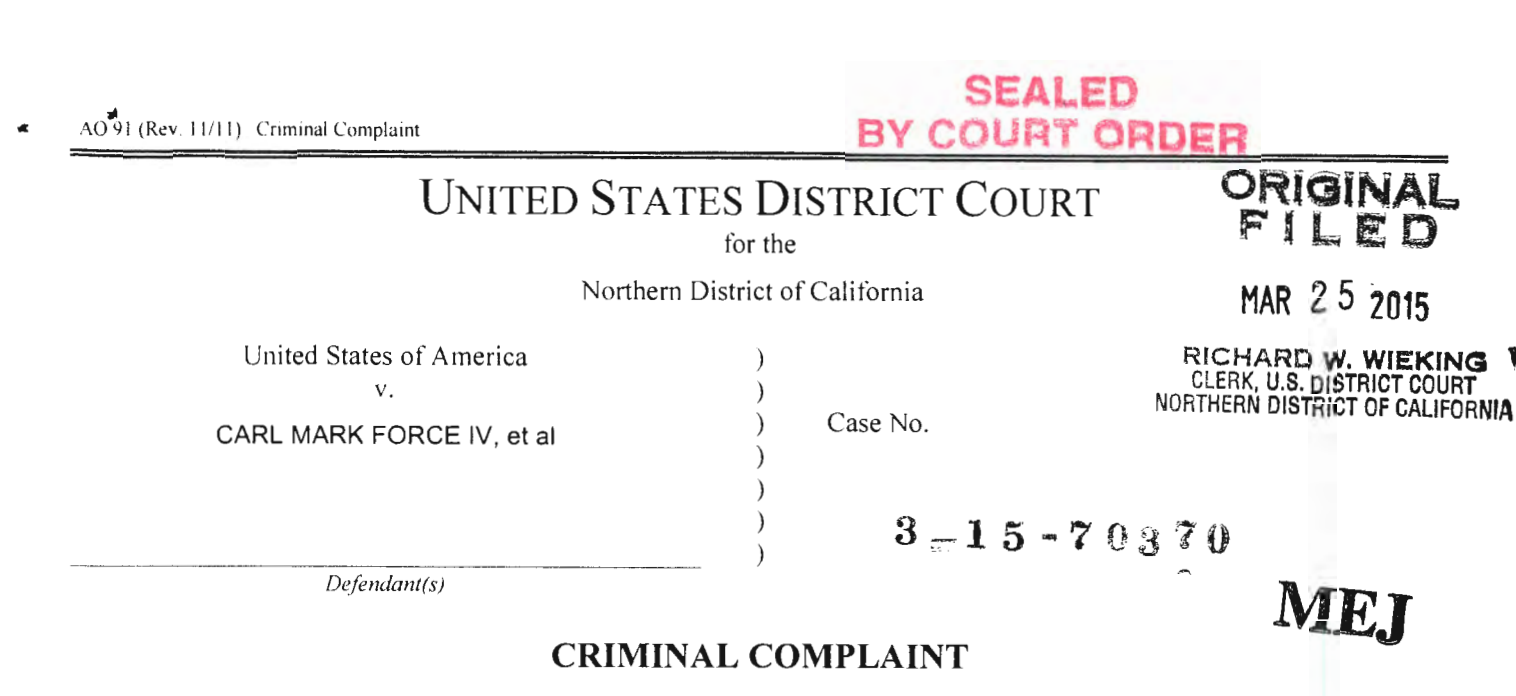
Two US Federal agents involved in the investigation of the Silk Road marketplace have been charged with a slew of crimes: fraud, corruption, money laundering and tax violations. The criminal complaint was unsealed today: http://www.justice.gov/sites/default/files/opa/press-releases/attachments/2015/03/30/criminal_complaint_force.pdf.
Published on March 29th, 2015
There are far more people with ideas than there are programmers to turn those ideas into reality. Even people with great ideas, domain knowledge and capital can have a hard time finding a technical co-founder to team up with.
Published on March 19th, 2015
If you want to start a bus line in Ontario you'll need to prove to the Ontario Highway Transport Board that your service will serve "public necessity and convenience" which includes, among other things, explaining your "impact on existing carriers if the service were granted". You also need to tell the board who are your "10 Largest Shareholders" and the "No. of Shares held" by each of them, your "business plan" and a "projected operating statement for the first year". After you file this information anyone in Ontario can request a copy ("All information pertaining to the applicant i.e. business plan, supporting evidence, etc. is on file at the Board and is available upon request." [e.g. on pg. 472]).
Published on March 18th, 2015
Bitcoin is changing perspectives on how we manage assets. If money can be moved around instantaneously without friction then why not shares too? In 2015 shares are often digital abstractions traded through all-electronic stock exchanges. Bitcoin enthusiasts look forward to a world where banking, investment and securities companies are disintermediated and the world's savers can invest around the world without friction. But how does this new model for issuing stock fit within securities laws?
Published on March 3rd, 2015
QuadrigaCX, Canada's dominant Bitcoin exchange, is set to become the world's first publicly traded Bitcoin exchange according to Bitcoin Magazine. I don't see the news reported anywhere else (including on Quadriga's own site/Twitter) but Christie Harkin, the author of the article is a good source.
This is pretty big news for a Canadian company that only started a little over a year ago. Up until this year there were three exchanges competing for Canadians' wallets but as of mid-February there's only Quadriga. Given that the gross margins on Bitcoin trading are ~0.5%, Quadriga is probably still standing due to their cost structure being lower than their former competitors.
Published on March 2nd, 2015
Canadian legal & tech people are very keen on Ross, a software system built on top of IBM's Watson that's designed for law. One of the co-founders of the Ross team* describes it as "[b]asically, what we built is a [sic] the best legal researcher available". I wish this was true but I'm very skeptical.
Watson is a question-answering computer system that was designed to win at Jeopardy (it beat the previous champion, Ken Jennings) but has since been expanded to tackle more general question-answering. IBM promises that it's a "new era of computing" but the area it's operating in, "natural language processing", is a hot space with companies like Facebook pouring resources into their own solutions. It's an area that has been of interest to researchers for more than half a century yet applications that use it are relatively rare. Has IBM made enormous breakthroughs that will soon change the way we interact with computers?
Published on February 24th, 2015
Q: How much would Canadian merchants save by switching to the Bitcoin network? A: About $9 billion per year.
Credit card transaction fees are around $9 billion per year in Canada. To process those transactions using Bitcoin would cost 1/100th of that: only $90 million. Read on for the math.
Published on February 2nd, 2015
Lawyers think they know what makes a successful appeal but there aren't any numbers. What's the chance that a client's appeal will succeed? That's hard to answer but an analysis of thousands of Supreme Court decisions shows that there are factors that make cases more or less likely to result in a win for the appellant.
The odds calculator that you see below allow you to see what the approximate chance of success is for a person contemplating an appeal to the Supreme Court of Canada. Read more at the bottom of this page.
Published on February 1st, 2015
These are the business cards I've used since I started my practice: