

There's a concept that's very popular in the programmer community: "technical debt". Over time, new code that's not properly documented, or not properly architected, can slowly weigh down the project. Ultimately, technical debt can weigh down the entire business, stalling features and preventing bugs from being fixed. As the term implies, the idea of technical debt is that it's a debt that must one day be paid for. Companies have a similar problem with legal debt.
Decentralized Money: What Can Damien Hirst's NFTs Tell Us About Decentralization
Published on June 11th, 2022

Cryptocurrency enthusiasts often describe its value proposition as being at least partly based on it being "decentralized". Cryptocurrencies are decentralized, it's true, but in a way that's more subtle than it might first seem. It's not the lack of a central bank or some other legal angle that makes cryptocurrency decentralized. It's also not in the activities that it's used for. It's decentralized because of its technical functioning. This is a bit challenging to understand from a cryptocurrency point of view, but recent developments in NFTs help make it more clear. More specifically, Damien Hirst's recent NFT collection called "The Currency" helps make the type of decentralization in cryptocurrency more clear.
Insider Trading, Secret Deals, And Cryptocurrency
Published on May 23rd, 2022
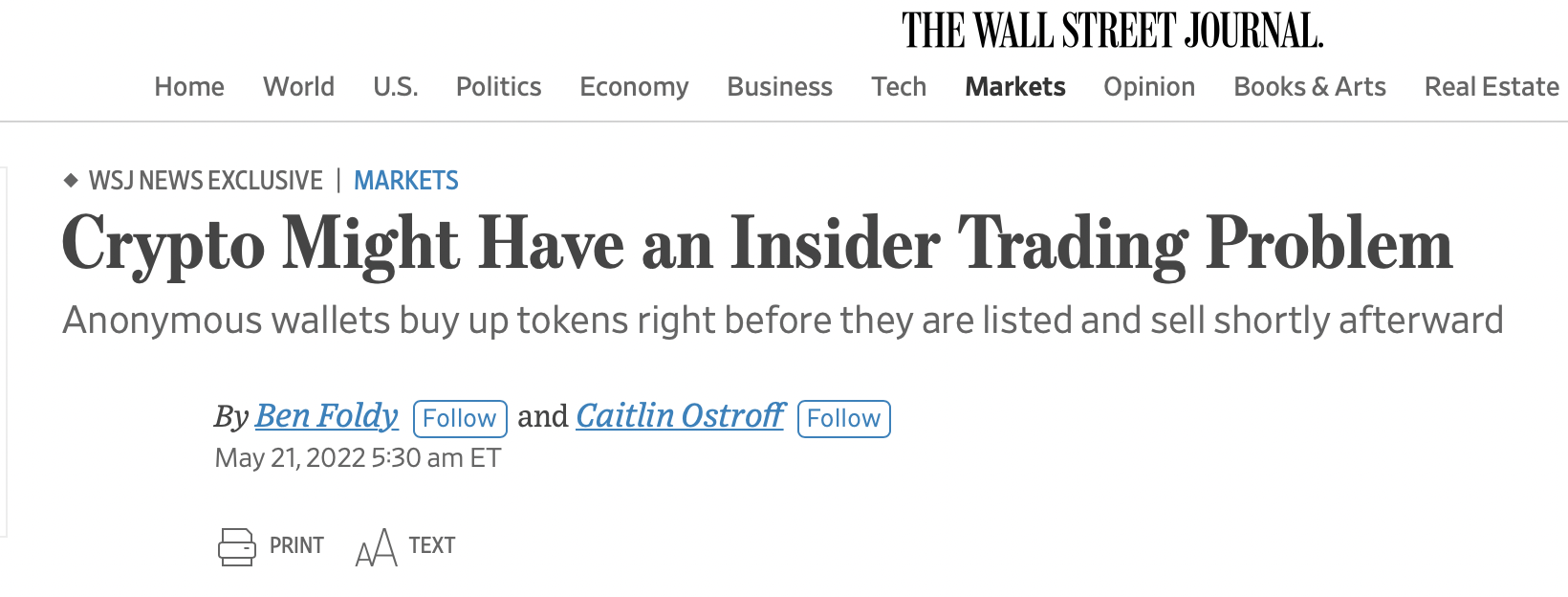
The Wall Street Journal recently ran an article: “Crypto Might Have an Insider Trading Problem”. This article is just the latest in a long series that confuses insider trading, an offence under securities laws, and acting on secret knowledge outside of a securities context.
No Remedy: Legal Realism And How Smart Contracts Help
Published on May 12th, 2022
One of the most important subjects in law, because of its profound impact on us all, is “remedies”. My Remedies professor in law school repeated a mantra that's stuck with me through nearly a decade of law practice, and it's one of the most important lessons to learn about law: without a remedy, there is no law. The rest of this blog post explores the reality of this maxim in Canada today, and what global technologists in the blockchain field may do to help with the situation.
Ancient Law, Modern Application
The Biggest Change to Ontario's Capital Markets Regulation In Decades: Impact On Crypto
Published on May 6th, 2022
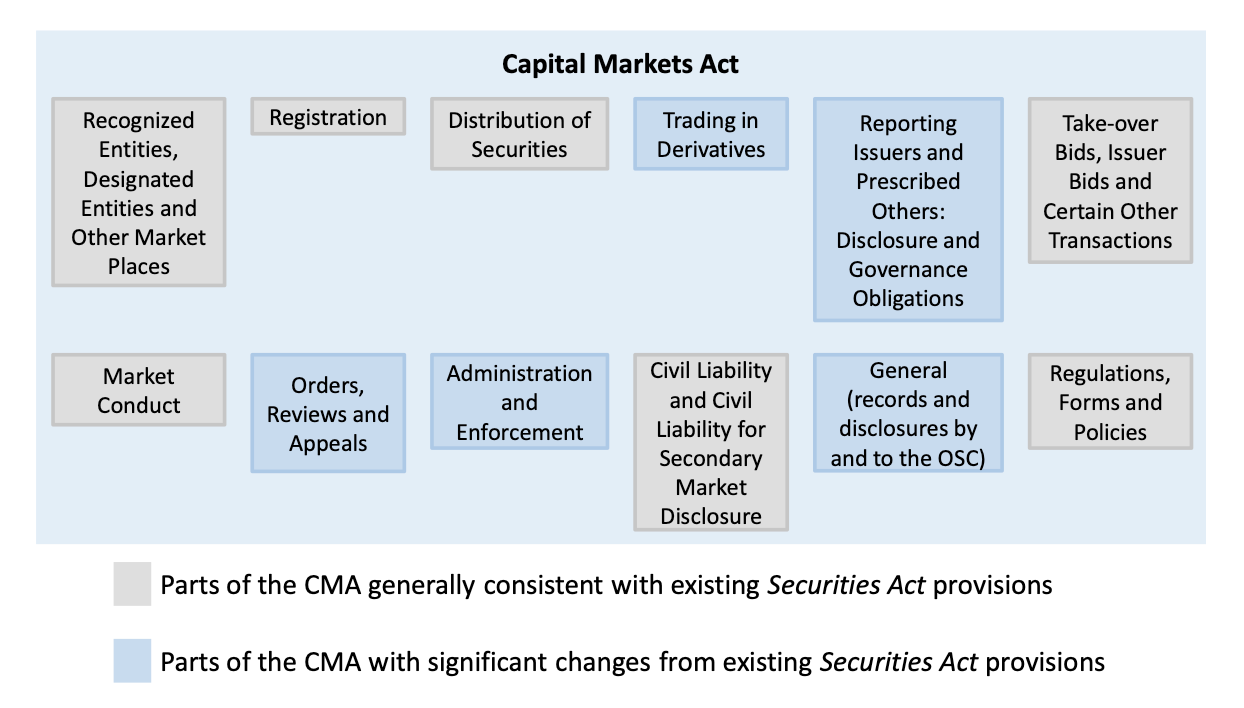
A draft law was published for comment by the Ministry of Finance in Ontario late last year, igniting a firestorm of criticism from the investment industry. Canada's crypto industry seems to have not noticed that the draft law would be an enormous change to how cryptocurrency and tokens are regulated in Ontario (and consequentially, Canada as a whole). This blog post explains the proposed law, why the investment industry doesn't like it, and what it might do to the nascent Canadian blockchain industry. The diagram above shows the areas of the Ontario Securities Act that have significant changes under the new Capital Markets Act.
Axie Infinity's $600 Million Loss: Why Decentralization Matters
Published on April 6th, 2022

Axie Infinity is a video game with a built-in currency called "AXS". Yesterday, more than $600 million of AXS changed hands worldwide, and the total value of the tokens in circulation is somewhere in the realm of $5 billion. The AXS token is more the game than the video game that surrounds it, but the game's high volume of activity necessitated a move to a "sidechain" for Ethereum transactions (like Polygon). This approach has been common in the last couple years as Ethereum gas fees have soared to levels that make many of the applications of blockchain technology untenable. Unfortunately, in the process of solving one problem they created another.
Regulatory Ladders: Lessening The Downsides Of Regulation
Published on April 5th, 2022
The most common consequence of a regulatory regime is a general lessening of competition in the regulated sector. The "stronger" the regulation, the fewer in number will be the companies that operate in the regulated sector. Sometimes monopoly or oligopoly is even a stated objective of government, whether under the guise of "state champions", "Crown corporations", or "utility". Restricted professions abound in modern countries, including lawyers, doctors, and often hairdressers. Licenses, capital requirements, reviews, hearings, applications - modern state apparatus has many ways of making it harder for business people to do what they do. Investors like the winners, describing their regulatory status as a "moat" or what economists call "barriers to entry". How each barrier works is different, but the net result is that fewer entrepreneurs apply themselves to starting new businesses in regulated areas, and incumbents gain a leg up that they wouldn't have under a more competitive economy. Customers lose out on options they'll never know they could have had.
The savvy reader will now stop and say: "but what about the benefits?". The costs may be enormous, but aren't the benefits high? That may be true, but if there's a way to reduce the costs and gain most of the benefits, wouldn't that be a better approach?
The Impossibility Of Automated Contract Generation
Published on March 13th, 2022

If software can generate music, art, code, circuits, and so much more, why can't computers replace lawyers for drafting agreements?
Shakepay: Canadian Virtual Currency Dealer Raises $44 Million
Published on January 20th, 2022

Congratulations to my client, Shakepay, on raising $44 million! Here's their blog post with more information: https://blog.shakepay.com/weve-raised-44-million-to-usher-in-the-bitcoin-golden-age/.
Cryptocurrency: A Global Public System
Published on January 13th, 2022
For years, critics with a limited understanding of cryptocurrency, have been seizing on a point that they think they understand: power consumption. Or, at least, they think they understand that. They understand that global warming is related to energy consumption, and they fear that cryptocurrency is causing it. This blog post looks at the criticisms levelled by journalists and others about the energy use of cryptocurrencies. It begins by examining the critics arguments and concludes by explaining that energy use of cryptocurrency is not particularly different from other energy uses. What's particularly interesting is to look at the benefits to people who do not hold or use cryptocurrency, who benefit from its existence even without using it.
Everything Uses Energy
Starting A Cryptocurrency Business in Canada: Buying & Selling
Published on December 28th, 2021
This blog post addresses the entrepreneur looking at starting a company to buy and sell cryptocurrency ("virtual currency" under AML laws) like Bitcoin, Ethereum, and the myriad tokens that have been launched. There are three main areas of regulation in Canada; virtual currency dealers, securities, and tax. This article concludes with a brief discussion of what sort of teams people put together for implementing the paperwork side of this business.
Virtual Currency Dealers
Lawyers Who Want Your Crypto Business: Nine Canadian Lawyers
Published on December 18th, 2021
The best cryptocurrency lawyer 15 years from now will probably be someone who isn't in the news today. They're struggling to build their business and cut through the noise, while delivering great value to clients. A lot of lawyers news covers the people who are partners at big firms, or who have PR/advertising budgets. But what most people need is someone who's reasonably priced, gets their work done, and most of all: is available. With the rapid groth of crypto, and the accompanying startups that are powering the industry forward, comes a significant need for lawyers. Many lawyers are full for work and the consequence of not having a lawyer can be disastrous. So I reached out on LinkedIn to find lawyers who are looking for more work in this area and are available to help.
I solicited each of the lawyer's information and gathered it into a spreadsheet. The rest of this blog post is what the lawyers sent me. I don't know most of these people personally, and can't speak to their work, but that doesn't mean they aren't great - it just means I need to find the time to chat with more lawyers! I encourage you to reach out directly to several of these people to find the lawyer who's right for you. Further down in the post you'll find a short summary of each person's practice.
The C.D. Howe Stablecoin Paper: An Opportunity To Think About Private Money & The Role Of Regulation
Published on December 13th, 2021
A few weeks ago, the C.D. Howe Institute in Toronto wrote a commentary on stablecoins created by central banks, specifically the Bank of Canada: https://www.cdhowe.org/public-policy-research/two-sides-same-coin-why-stablecoins-and-central-bank-digital-currency-have. The report is called “Two Sides of the Same Coin: Why Stablecoins and a Central Bank Digital Currency Have a Future Together”. This commentary is a great opportunity to explore differences in opinion on this issue because C.D. Howe's works is quite good, and independent.
One of the authors of the commentary, Mark Zelmer, is the former Deputy Superintendent of OSFI. The excellence of the authors is a great reason to look at this report critically. The commentary contains a number of premises that are worth challenging, and conclusions that are far less definite than the commentary makes them out to be. This has implications for governments, like Canada's, that are trying to grapple with modernizing their money systems during the "Great Digitization" (i.e. now). It also has profound implications for Canadians, who may soon be using a new type of money.
What Is Regulation?
Published on December 8th, 2021
Cryptocurrency is often referred to as “unregulated” or “the Wild West” but neither of these labels are accurate. Before getting into why it's wrong, what does “regulation” even mean? If we don't agree on what it means to be “regulated” vs. “unregulated” then there's no way to discuss whether cryptocurrency is the Wild West or not.
The Meaning Of Regulation In Canada
Against Crypto
Published on November 29th, 2021
There are strong arguments against cryptocurrency. Just like there are strong criticisms that can be leveled at Amazon or a favourite programming language - nothing in life is just upside. Below I've tried to capture some of what I regard as the best criticisms, which are: energy use, e-waste, gambling, scams, security, and uncertain regulation.

15 Cryptocurrency Benefits
Published on November 21st, 2021
“Why cryptocurrency?” Why have millions of people taken up buying it, using it, and building with it? This blog post lists key features that I've found noteworthy and caused me to learn something about systems that don't involve digital assets. I've grouped the features according to the barrier that they help overcome.
A. Barriers To Participation
54 Small Business Ideas
Published on September 26th, 2021
Here are 54 ideas I've jotted down in my phone over the last couple years as business ideas. Some are good ideas and others aren't, but they might be food for thought that leads you to a great business concept.
Law
Exploring Law Firm Content: Blockchain Topics
Published on September 22nd, 2021

Law firms generate large amounts of quality legal content that's often hard to find. They're not always the best at search engine optimization and the content is often not really designed to be easily consumed (it's for a niche audience). One of the main purposes of this content is to show who knows what they're talking about, because it's better to have an article showing that than a brief line in the bio of a lawyer saying it. But how can someone find which lawyers are good at what? How can that content be exposed? Are there ways of synthesizing this content or making it more readily available to the people it's designed for and others?
Drafting Contracts For Cryptocurrency Clients
Published on September 19th, 2021
I've been drafting contracts with a heavy focus on cryptocurrency since 2014. This blog post gives a few tips I've picked up over the years.
Types of Contracts
Local Encryption (E2E) for Lawyer Communications: ConvoPark Prototype
Published on April 22nd, 2021
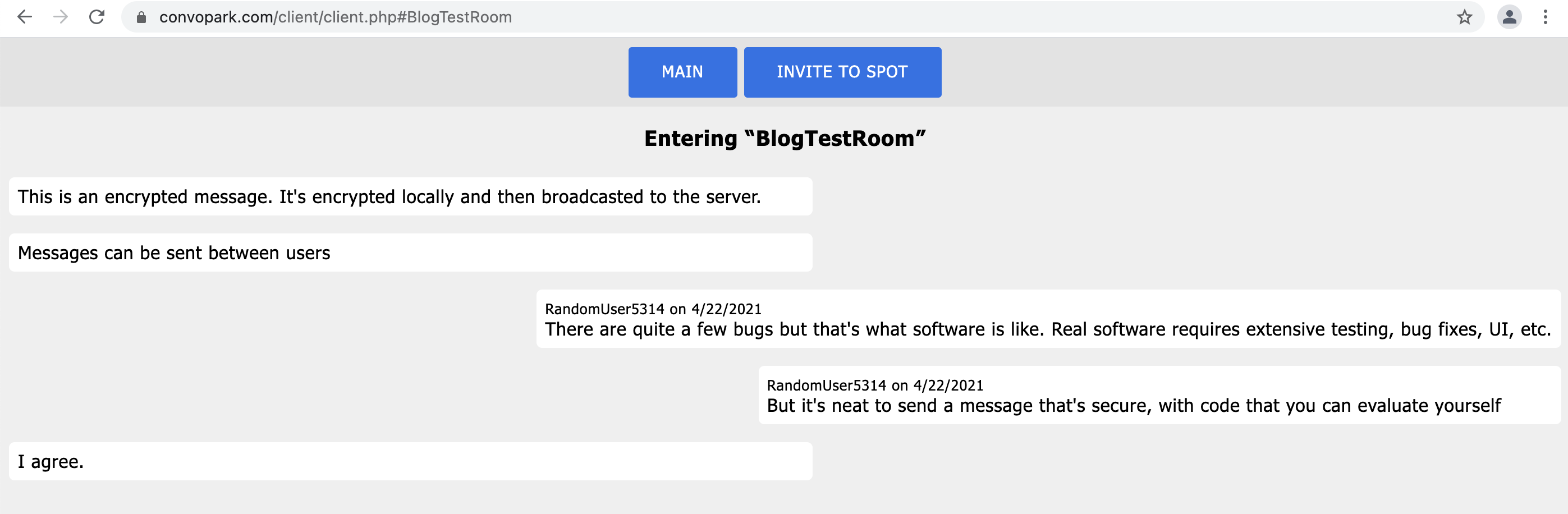
Confidentiality is key to the work of lawyers but most Internet-delivered services have no encryption other than transport encryption (HTTPS). This issue affects even the largest companies such as the 2020 Twitter account takeovers of Obama, Biden, Musk, and others, Snapchat employees looking at photos, the Canada Revenue Agency, and just about everyone else. The basic problem is that the data isn't encrypted so anyone with the right permissions at the company, or someone who can change permissions, can access all of the data. These sorts of services are the primary way that people interact with lawyers in 2021.